 MIDDLE EAST
- Home
- Applications
- Heat treatment
Application
Heat treatment furnace atmospheres
Dew point and oxygen in heat treatment furnace atmospheres for annealing, brazing, sintering and carburising, with portable and in-line YORK analyzers.
Why it matters
In heat treatment, the furnace atmosphere decides whether parts come out bright, scaled, decarburised or correctly carburised. Moisture and oxygen are the two impurities most often measured.
In nitrogen–hydrogen and pure hydrogen atmospheres for bright annealing, brazing and sintering, a low dew point and low oxygen prevent oxidation. In endothermic atmospheres, dew point is used to control carbon potential.
Portable analyzers are used to check furnaces and gas supplies; in-line analyzers give continuous monitoring with alarms.
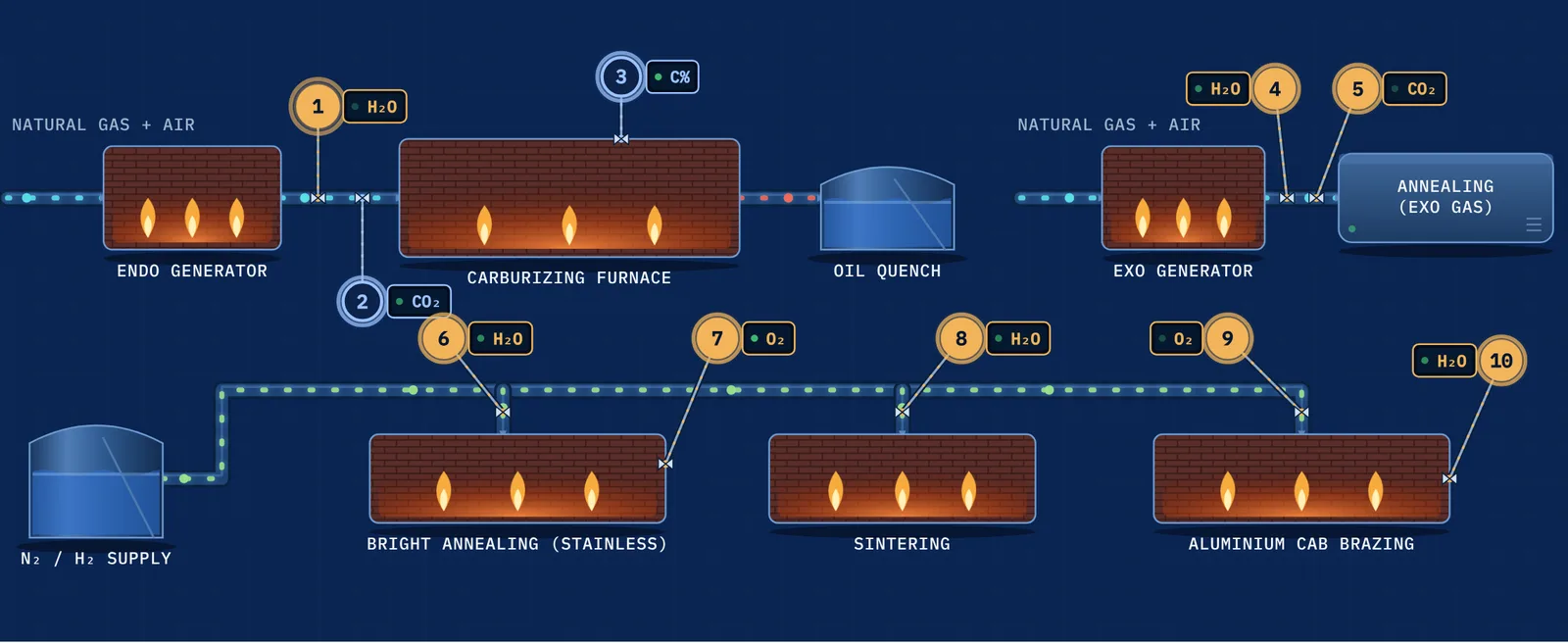
Which atmosphere, which measurement
| Atmosphere | Typical processes | What is usually measured |
|---|---|---|
| Nitrogen–hydrogen, pure hydrogen | Bright annealing, brazing, sintering | Dew point (moisture) and trace oxygen |
| Endothermic gas | Gas carburising, carbonitriding | Dew point, as one input to carbon potential control |
| Gas supply (N₂, H₂, dissociated ammonia) | All of the above | Dew point and oxygen at the furnace inlet |
Dew point and moisture content
Furnace specifications give moisture either as a dew point or in ppmv. At atmospheric pressure they convert as follows (Sonntag 1990, frost point over ice):
| Dew point / frost point | Water content |
|---|---|
| −20 °C | about 1,020 ppmv |
| −30 °C | about 375 ppmv |
| −40 °C | about 127 ppmv |
| −50 °C | about 39 ppmv |
| −60 °C | about 11 ppmv |
| −70 °C | about 2.6 ppmv |
Each 10 °C drop in dew point means roughly a third of the water. The dew point calculator converts between the two units.
Where to measure
- Gas supply inlet: nitrogen, hydrogen or dissociated ammonia before it enters the furnace, to separate supply problems from furnace problems.
- Furnace or muffle: sample from the hot zone or the cooling zone, where it is decided whether bright parts oxidise.
- Endothermic generator outlet: dew point is checked as part of carbon potential control.
- After maintenance or a door leak: a portable check confirms that the atmosphere has recovered before production restarts.
Sampling and installation
- Furnace gas is hot. Cool the sample to near ambient temperature in a stainless steel line before it reaches the sensor, and keep the line warmer than the sample dew point so that water does not condense on the way.
- Endothermic gas can carry soot. Fit a filter ahead of the sensor and plan regular filter changes.
- Furnace atmospheres run close to atmospheric pressure, well within the 4 barg limit of YORK dew point instruments. Use a needle valve and a small vent flow, and do not pull the sample with a pump that could draw in air through leaks.
- Electrochemical oxygen sensors in hydrogen-rich gas typically last about 12 months, so plan sensor replacement accordingly.
- Hydrogen furnaces may have classified hazardous areas around them. Tell us the area classification. The portable DPT-600 Plus can be supplied with an Ex-marked nameplate (Ex ia IIC T4 Ga), and certificate details are sent with quotations so that you can check them against your site requirements.
Questions we are asked
What dew point does bright annealing need?
It depends on the alloy, the temperature and the hydrogen content, so the metallurgical specification decides. Stainless steels are the most demanding and are commonly annealed in atmospheres of about −40 °C dew point or drier. An instrument that reads well below the target, such as a metal-oxide sensor down to −110 °C frost point, leaves margin for trending.
Do you supply oxygen probes for carbon potential control?
No. In-situ zirconia oxygen probes used for carbon potential control are a different instrument. YORK instruments are used to check dew point and to monitor oxygen in nitrogen-based atmospheres and gas supplies.
Portable or in-line?
Portable instruments suit commissioning, audits and troubleshooting across several furnaces. In-line analyzers suit furnaces that run continuously and need an alarm when the atmosphere drifts. Many plants use both: fixed analyzers on critical furnaces and a portable unit to check them.
Suggested YORK instruments
- Atmosphere dew point checksDPT-600 Plus →
- Continuous dew point monitoringDPT830 →
- Oxygen in nitrogen-based atmospheresPGA530 →
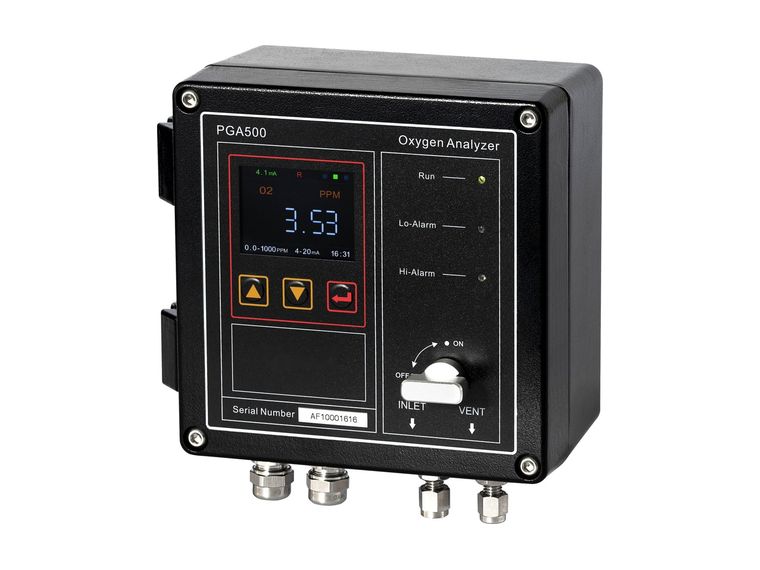
- Trace oxygen in protective gasPGA500 →
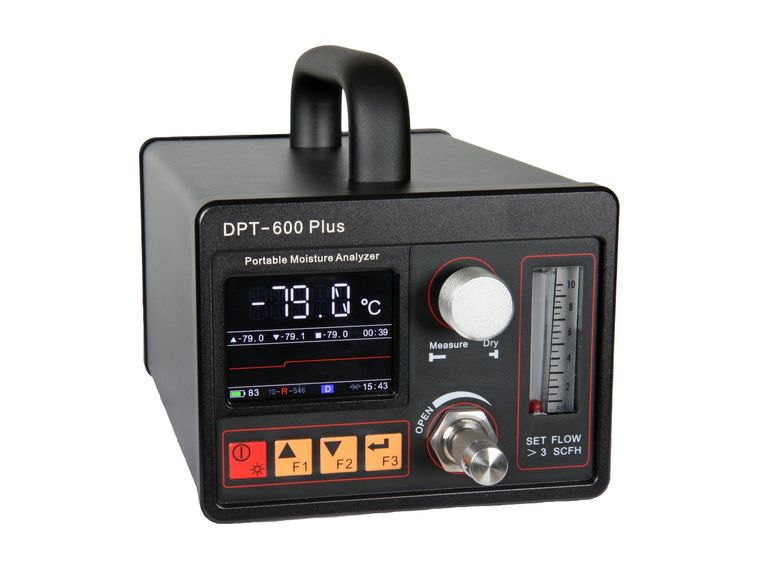
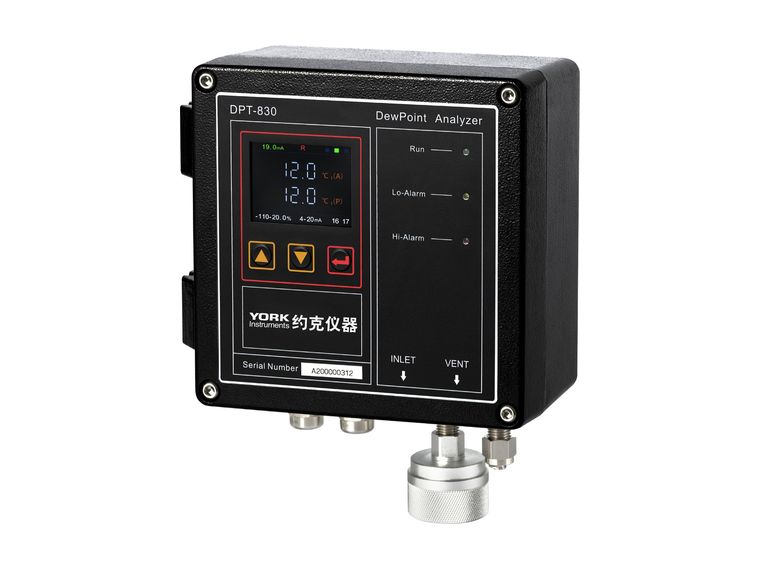
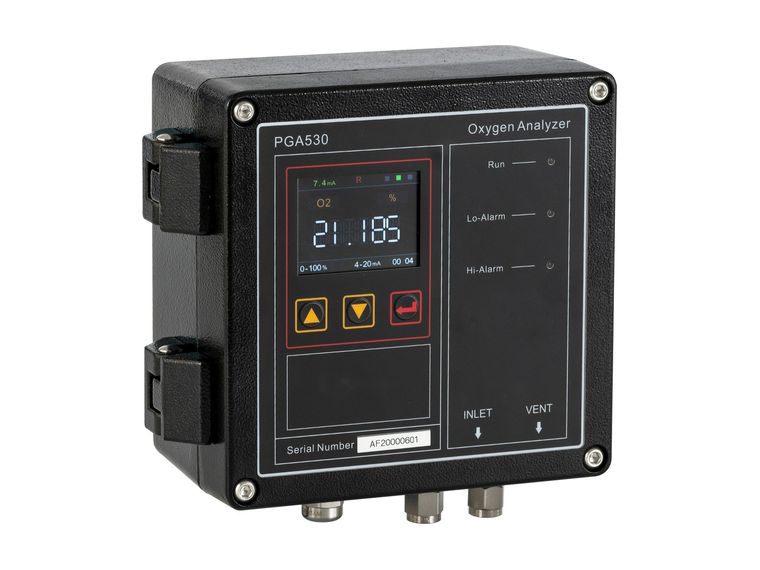
Where exactly are the points? See the animated heat treatment measurement-point map.
Discuss your application
Tell us the gas, pressure, sample point and the limit you need to meet, and we will propose instruments and a sample system.