 MIDDLE EAST
Compare models
| Model | Type | Measuring range | Key features |
|---|---|---|---|
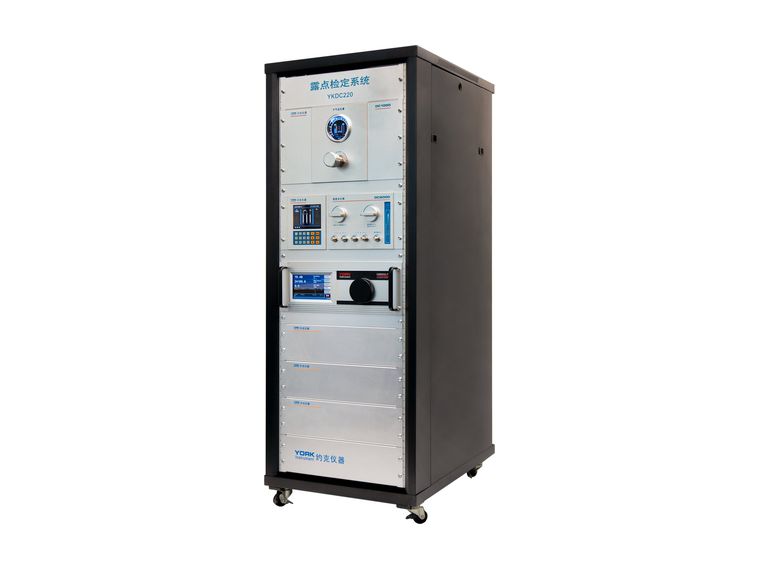
| YKDC220 | Dew point calibration system | Low humidity calibration system | 19-inch rack system, Dry gas generator, low humidity generator, reference hygrometer and compressor, Reference hygrometer: DM9700, DM9800 or DM9900 |
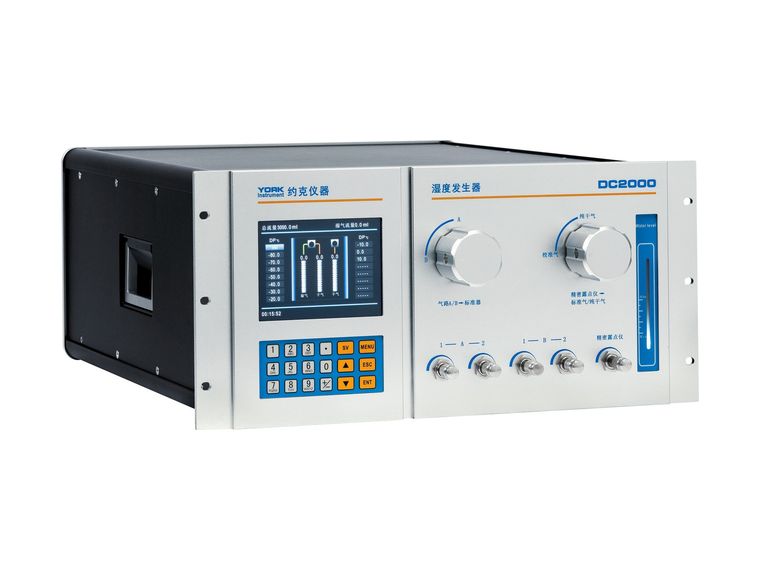
| DC2000 | Low humidity generator | Stability better than ±0.2 °C FP | Flow-divided mixing with four electronic MFCs, Humidity stability better than ±0.2 °C frost point, Multiple user-configurable calibration points |
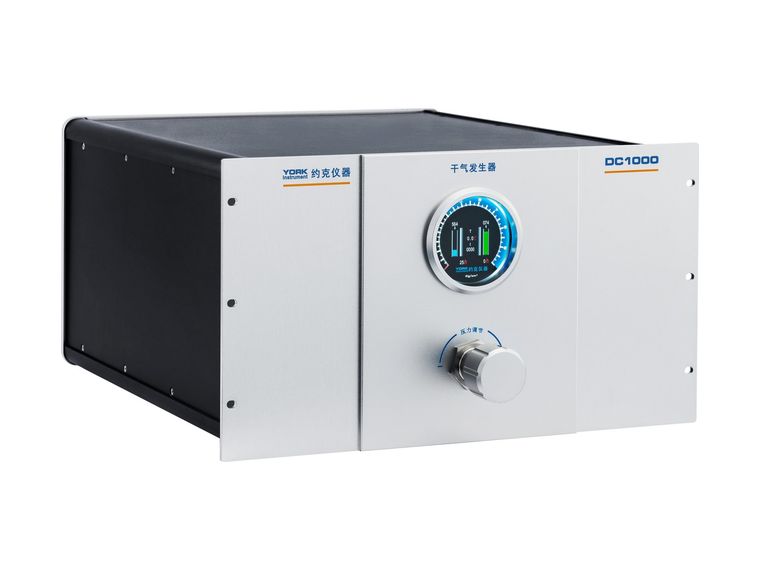
| DC1000 | Dry gas generator | Dry air below 1 ppmV (−75 °C DP), up to 10 NL/min | Up to 10 NL/min of dry air below 1 ppmV (−75 °C dew point), 1/4" stainless steel compression fittings |
Source: YORK Instrument product information, October 2026. Full specifications: product catalog (PDF).
How it works
The YORK YKDC220 low humidity calibration system is built for calibrating dew point analyzers and transmitters. Apart from the compressor, which is installed separately, it is mounted in a 19-inch rack and combines an oil-free silent compressor system, a dry gas generator, a low humidity generator and a high-precision chilled mirror reference hygrometer (DM9700, DM9800 or DM9900).
The DC1000 dry gas generator works on pressure swing adsorption and delivers up to 10 NL/min of dry air below 1 ppmV (−75 °C dew point). The DC2000 low humidity generator mixes dry and wet gas with four electronic mass flow controllers; humidity fluctuation is less than ±0.2 °C frost point, with multiple user-configurable calibration points and three gas outlets (one for the reference hygrometer, two for instruments under calibration).
Low humidity generator, dry gas generator or complete system?
Buyers search for these instruments as a low humidity generator, a low dew point generator or a dew point calibration system. They do different jobs:
For a step-by-step procedure, see how to calibrate a dew point sensor.
| What you need | YORK option | What it does |
|---|---|---|
| A very dry, steady gas source: zero checks, purging, drying down sensors and sample lines | DC1000 dry gas generator | Pressure swing adsorption; up to 10 NL/min of dry air below 1 ppmv (−75 °C dew point) |
| Stable low dew point set points to check or calibrate analyzers against | DC2000 low humidity generator | Mixes dry and wet gas with four electronic mass flow controllers; fluctuation less than ±0.2 °C frost point; multiple user-configurable set points |
| A complete in-house calibration bench | YKDC220 calibration system | 19-inch rack with oil-free compressor system, DC1000, DC2000 and a chilled mirror reference hygrometer (DM9700, DM9800 or DM9900) |
How a low dew point calibration works
The generator sets a stable moisture level and feeds it to a reference hygrometer and to the instruments under test at the same time; the DC2000 has one outlet for the reference and two for instruments under calibration. The generator makes the set point stable, and the chilled mirror reference tells you what that set point actually is. Traceability therefore comes from the reference hygrometer and its own calibration certificate. Typical users are instrument service companies, calibration laboratories and plants that check their own dew point transmitters; see dew point calibration laboratories.
How very low dew points are produced
A stable gas at −60 °C dew point or below is made in three steps, and each one needs its own instrument:
- Dry the gas. The DC1000 dry gas generator uses pressure swing adsorption to deliver up to 10 NL/min of dry air below 1 ppmV, about −75 °C dew point. This is the dry end of every set point.
- Set the point. The DC2000 low dew point generator mixes the dry gas with a controlled flow of wet gas through four electronic mass flow controllers and holds the set point within ±0.2 °C frost point.
- Measure the set point. A chilled mirror reference reads what the set point actually is. The DM9900 measures down to −90 °C frost point and is the usual reference for very low dew point work.
| What you want to calibrate | Typical YORK set-up |
|---|---|
| Compressed air and instrument air transmitters (around −40 °C dew point) | DC2000 with a DM9700 or DM9600P reference |
| Trace moisture analyzers for industrial gases, LNG and dryer outlets (−60 °C frost point and below) | DC1000 + DC2000 with a DM9900 reference, or the complete YKDC220 system |
| A dry zero gas only | DC1000 |
Practical points at very low dew points
- Use short, clean stainless steel tubing and leak-tight compression fittings. Plastic tubing and small leaks add moisture that the generator cannot remove.
- Allow time. Below −60 °C, sample lines and sensors take much longer to dry down and settle than at −20 °C.
- Calibrate from dry to wet: start at the lowest set point and step up, so the lines do not have to dry down again between points.
- Traceability comes from the reference hygrometer and its own calibration certificate, not from the generator.
For the full procedure, see how to calibrate a dew point sensor. Tell us the lowest dew point you need to reach and the instruments you calibrate, and our Dubai team will propose a set-up.
Questions
What is a low dew point generator?
A low dew point (low humidity) generator produces a gas stream at a known, stable moisture level, usually stated as a frost point, so that dew point analyzers and transmitters can be checked or calibrated against a reference hygrometer. The YORK DC2000 mixes dry and wet gas with four electronic mass flow controllers, with fluctuation less than ±0.2 °C frost point.
Do I need a reference hygrometer with the generator?
Yes, for a traceable calibration. The generator provides a stable set point; a chilled mirror reference such as the DM9700, DM9800 or DM9900 measures it, and the instruments under test are compared with that reading. The YKDC220 system includes the reference.
Who supplies YORK instruments in the GCC?
YORK Instrument has a Dubai-based regional contact covering the UAE, Saudi Arabia, Qatar, Oman, Kuwait and Bahrain: dubai@yorkinstrument.com, +971 55 137 4866.
Need help choosing?
Tell us the gas, pressure, measuring range and quantity, and our Dubai contact will propose a model.