 MIDDLE EAST
- Home
- Applications
- Calibration labs
Application
Calibration laboratories
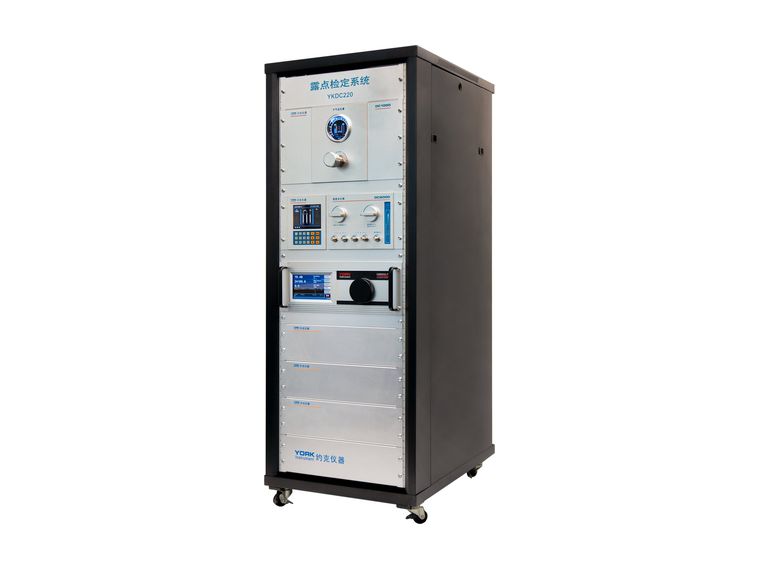
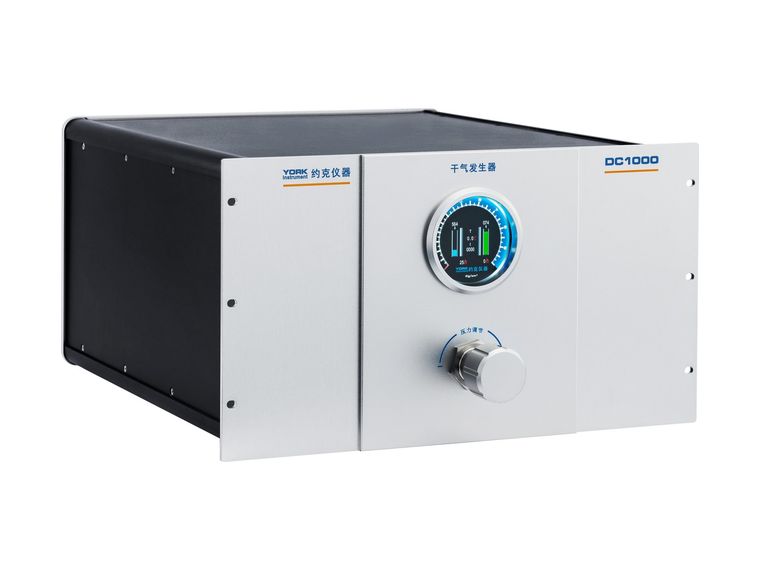
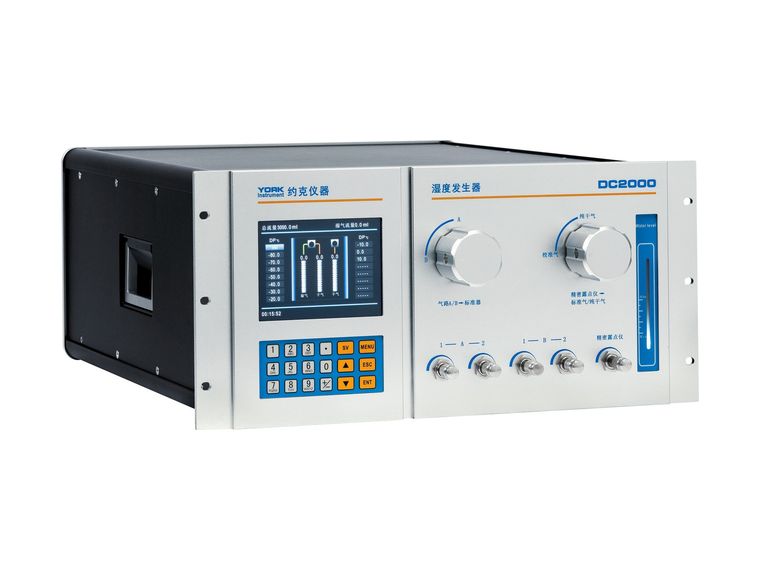
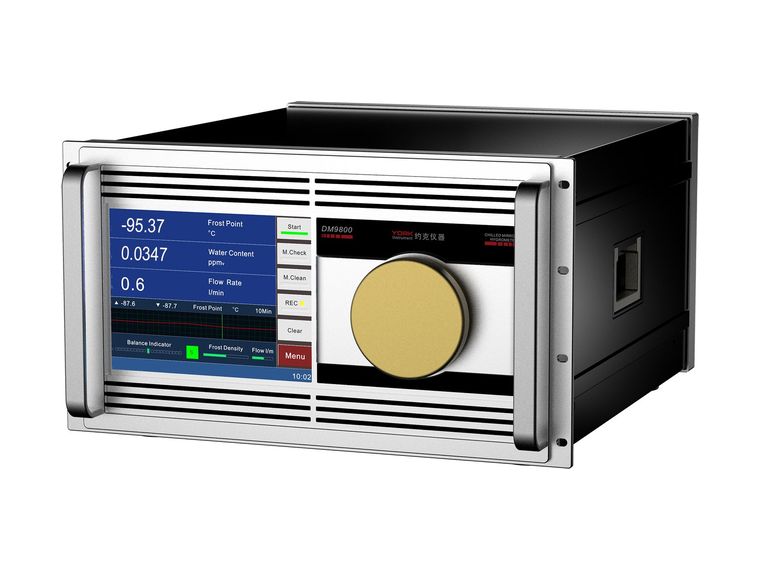
Equipment for dew point calibration laboratories: YKDC220 low humidity calibration system, DC1000 dry gas generator, DC2000 low humidity generator and DM series reference hygrometers.
Why it matters
A dew point calibration bench needs a stable humidity source and a reference instrument. The humidity source produces gas at known, steady dew points; the reference hygrometer measures the same gas as the instrument under test.
Chilled mirror hygrometers are the usual reference because they measure dew point directly. The YORK YKDC220 combines the dry gas generator, low humidity generator, compressor and a DM9700, DM9800 or DM9900 reference into one system.
How the traceability chain works
A dew point calibration is only as good as the reference behind it. A typical chain runs from a national metrology institute, to the laboratory's reference hygrometer (calibrated and certified), to the working instruments that customers send in. Laboratories that issue accredited certificates work under ISO/IEC 17025 and are assessed by the regional accreditation body, for example EIAC in the UAE or SAAC in Saudi Arabia. A chilled mirror reference such as the DM9900 is used because it measures dew point directly rather than inferring it from a sensor property. A calibration certificate for the DM9900 is available (chargeable).
Building the bench
- Dry gas source. The DC1000 produces dry air below 1 ppmV (−75 °C dew point) at up to 10 NL/min by pressure swing adsorption.
- Humidity generator. The DC2000 mixes dry and wet gas in controlled proportions to set the test dew point, with stability better than ±0.2 °C frost point.
- Manifold. The generated gas flows to the reference hygrometer and to the instruments under test in parallel, at the same pressure.
- Reference hygrometer. A DM9700 (−70 °C), DM9800 (−80 °C) or DM9900 (−90 °C frost point), chosen to cover the lab's lowest point.
The YKDC220 combines these parts, with a compressor, into one low humidity calibration system.
Which points to calibrate
Choose points that match what customers actually measure. Compressed air instruments are usually checked around −70 °C, −40 °C and −20 °C; natural gas and industrial gas instruments need the low end; process and room instruments need points near 0 °C and above. With the DC1000 as the dry source, the bench reaches down to about −75 °C dew point.
For a step-by-step procedure, see how to calibrate a dew point sensor.
Where the uncertainty comes from
- The reference hygrometer's own calibration uncertainty.
- Generator stability and how long you wait for equilibrium. Low dew points settle slowly because water adsorbs on tube walls.
- Pressure differences between the reference and the instrument under test. Dew point changes with pressure, so keep both at the same pressure or correct for it.
- Line temperature. At high dew points, any tube colder than the dew point condenses water and changes the gas.
- Leaks and plastic tubing, which let ambient moisture into a dry stream.
Questions we are asked
Can one bench calibrate both portable meters and fixed transmitters?
Yes. Both connect to the same manifold with suitable adapters, and several units can be tested in parallel against one reference.
How often should the reference hygrometer be recalibrated?
Most laboratories follow a yearly interval, set in their quality system and adjusted by the reference's history.
We already calibrate humidity in air. What changes for low dew points?
The main additions are a dry gas source, stainless steel lines, longer settling times and a chilled mirror reference that reaches the frost points customers need.
Discuss your application
Tell us the gas, pressure, sample point and the limit you need to meet, and we will propose instruments and a sample system.