 MIDDLE EAST
- Home
- Applications
- Compressed air
Application
Compressed air: pressure dew point
Monitoring pressure dew point of compressed and instrument air after refrigerant and desiccant dryers, with YORK dew point transmitters and portable analyzers.
Why it matters
Moisture in compressed air corrodes pipework, damages pneumatic equipment and spoils products. Air quality is commonly specified with ISO 8573-1, where the water class is defined by pressure dew point — for example ≤ −70 °C for class 1, ≤ −40 °C for class 2 and ≤ −20 °C for class 3.
Desiccant dryers typically target −40 °C or −70 °C pressure dew point and refrigerant dryers around +3 °C. Continuous dew point monitoring after the dryer shows when desiccant is exhausted or regeneration fails, before wet air reaches the users.
Pressure dew point and atmospheric dew point
ISO 8573-1 classes refer to pressure dew point, the dew point at line pressure. When a sample is let down to atmospheric pressure, the amount of water stays the same but its partial pressure falls, so the dew point measured at atmospheric pressure is lower. At 7 barg:
| Pressure dew point (7 barg) | Dew point at atmospheric pressure |
|---|---|
| +3 °C (refrigerant dryer) | about −21 °C |
| −20 °C (class 3) | about −40 °C |
| −40 °C (class 2) | about −57 °C |
| −70 °C (class 1) | about −83 °C |
Mixing up the two is the most common reason a dryer looks out of spec on paper. The dew point calculator converts between them, and the ISO 8573-1 air class tool shows which class a reading meets.
Why Gulf plants see more dryer problems
In summer, compressors here often draw in air at 45 °C or more, and coastal sites add high humidity. Hotter, wetter intake air carries more water to remove and raises the aftercooler outlet temperature. Refrigerant dryers then run close to their limit and desiccant beds load faster. Continuous dew point monitoring catches the drift before it turns into condensate in the lines.
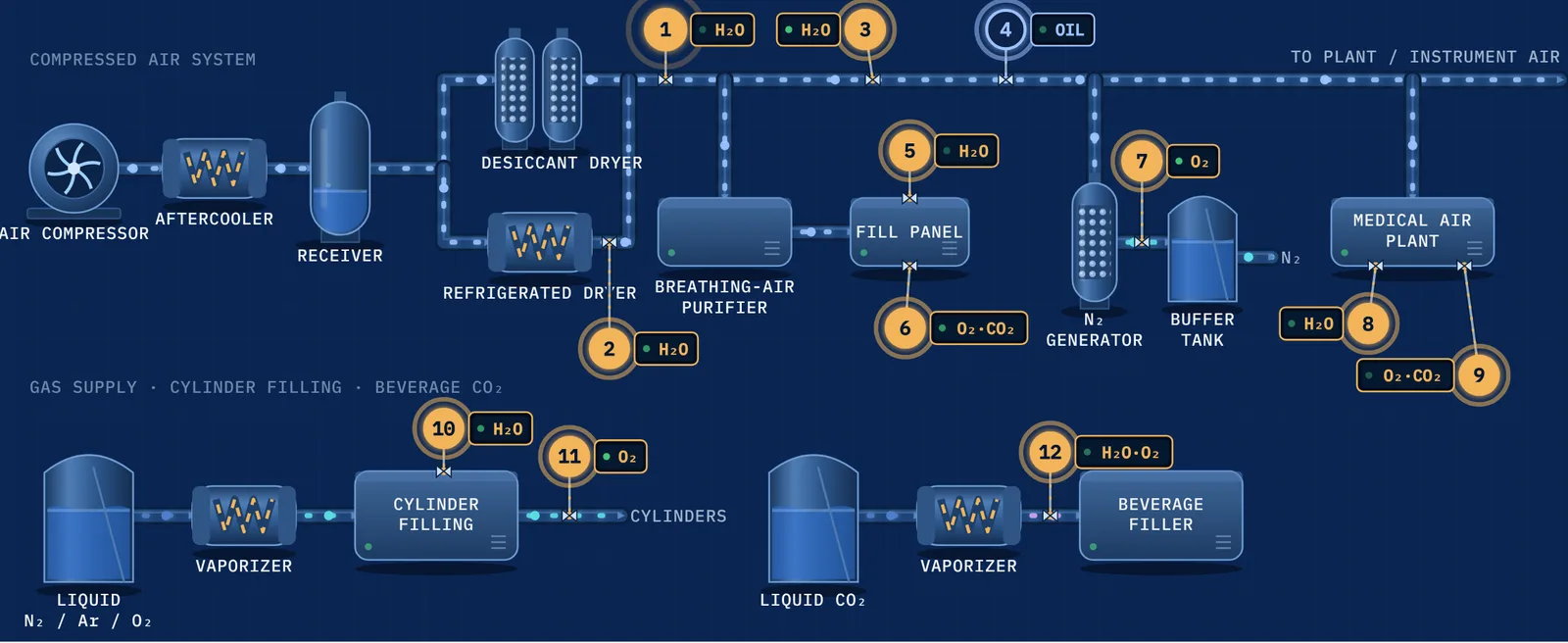
Where to measure
- Directly after each dryer: confirms dryer performance and raises an alarm when dew point rises.
- After the receiver or common header: where several compressors and dryers feed one network.
- At critical points of use: instrument air headers, product-contact air in food and pharmaceutical plants, and paint shops.
Installing the sensor
- Take the sample from the top of the pipe, never from a low point where liquid water collects. Avoid dead legs.
- Use a short stainless steel sample line with a needle valve and a small continuous vent flow. YORK dew point instruments accept up to 4 barg, so on a 7 barg line the sample is reduced in pressure and the reading converted to pressure dew point.
- On oil-lubricated compressors, fit a coalescing filter ahead of the sensor to keep oil off it.
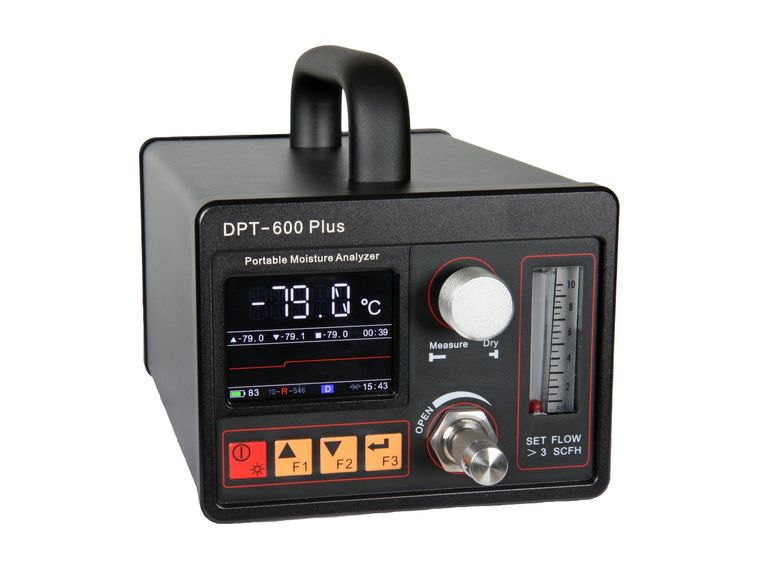
- During audits, check fixed transmitters against a portable DPT-600 Plus at the same point.
Questions we are asked
What dew point should instrument air have?
A common rule, given in ISA-7.0.01, is a pressure dew point at least 10 °C below the lowest ambient temperature the lines are exposed to. Many plant specifications simply call for −40 °C pressure dew point, which is ISO 8573-1 class 2.
Can the sensor sit at full line pressure?
YORK dew point instruments are rated up to 4 barg. On higher-pressure lines we supply a sample system that reduces the pressure, and the result is converted to pressure dew point.
Suggested YORK instruments
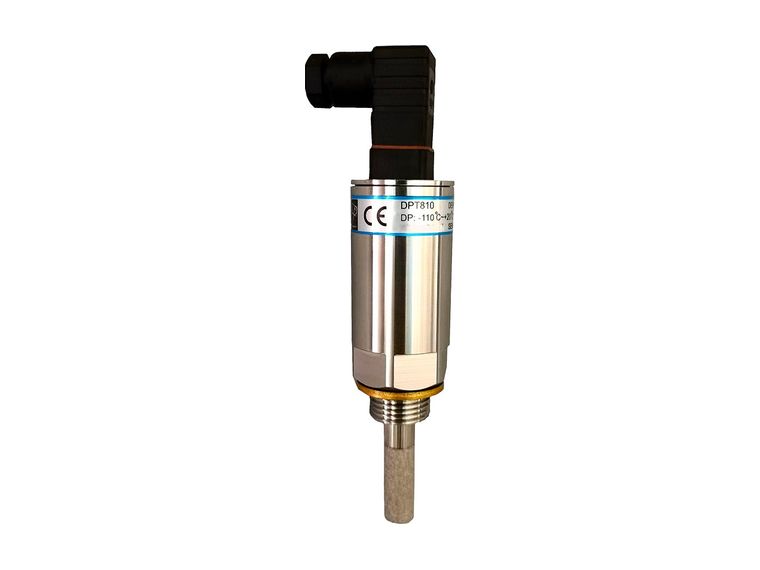
- Fixed monitoring after the dryerDPT810 →
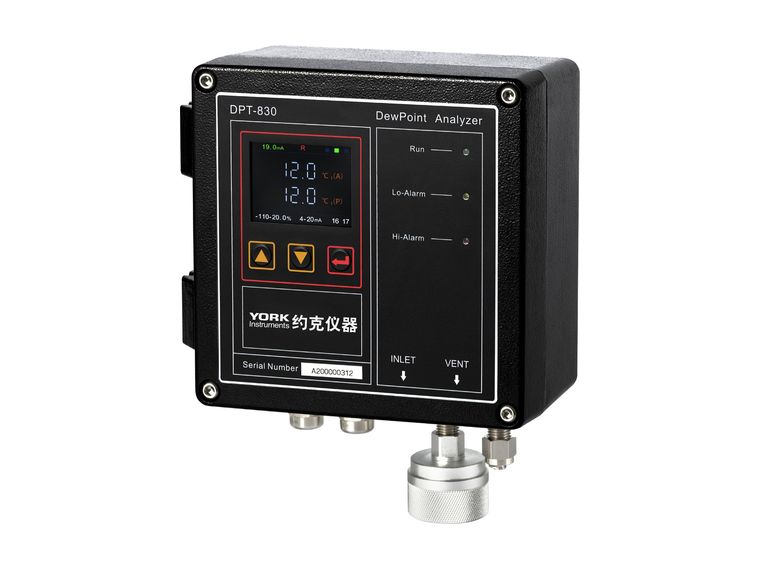
- In-line analyzer with alarm relaysDPT830 →
- Audits and spot checksDPT-600 Plus →
Buying a portable meter for audits? See dew point meters in the UAE, including ISO 8573-1 class readings and how to order.
Where exactly are the points? See the animated compressed air and industrial gas measurement-point map.
Working in a smelter? See the animated aluminium smelter measurement-point map.
Supplying a hospital? See the animated medical gas measurement-point map.
Discuss your application
Tell us the gas, pressure, sample point and the limit you need to meet, and we will propose instruments and a sample system.