 MIDDLE EAST
- Home
- Applications
- Food & beverage
Application
Food and beverage: CO₂ and packaging gases
Checking CO₂ concentration in modified-atmosphere packaging (MAP) gas mixtures, and oxygen in nitrogen generators and packaging gases, with YORK NDIR and oxygen analyzers.
Why it matters
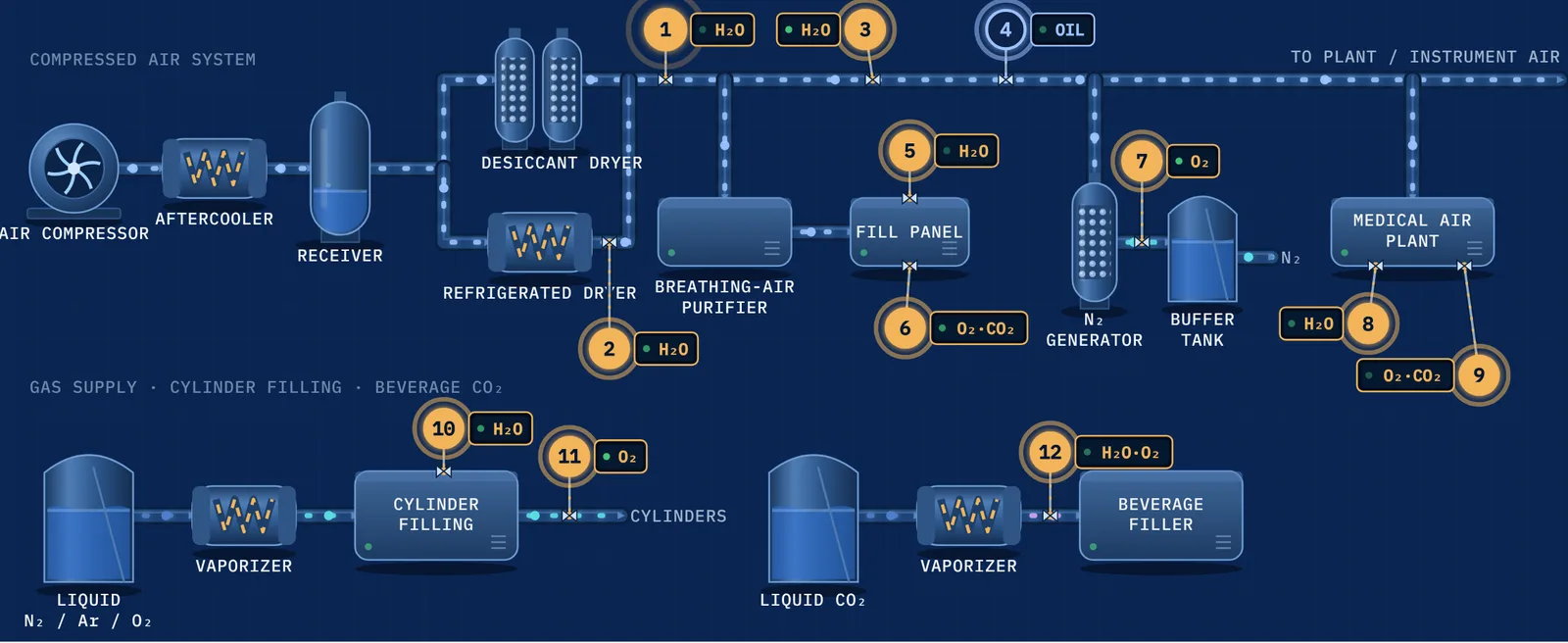
Food and beverage plants use carbon dioxide for carbonation and as a component of modified-atmosphere packaging (MAP) mixtures, and nitrogen to displace oxygen from packages, tanks and bottles.
Typical checks are the CO₂ concentration of MAP gas mixtures, the oxygen content delivered by on-site nitrogen generators, and the proportions in MAP gas mixers. Portable analyzers suit line checks; in-line analyzers give continuous monitoring with alarms.
Typical gas mixtures
Modified-atmosphere packaging replaces the air in a pack with a mixture chosen for the product. Exact recipes vary by producer, but typical ranges are:
| Product | Typical MAP gas |
|---|---|
| Red meat | high O₂ (about 70–80%) with 20–30% CO₂ |
| Poultry, cheese, cooked meats | about 30% CO₂, balance N₂ |
| Bakery | about 50–60% CO₂, balance N₂ |
| Snacks, coffee, nuts | nitrogen with residual oxygen kept low, often below 1–2% |
Two checks follow from this: is the mixer delivering the right CO₂ proportion, and is the oxygen level where it should be?
Where to measure
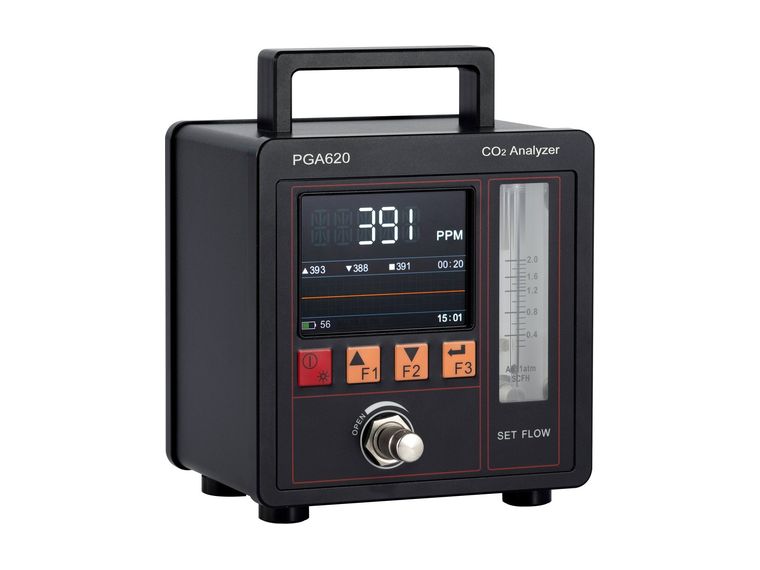
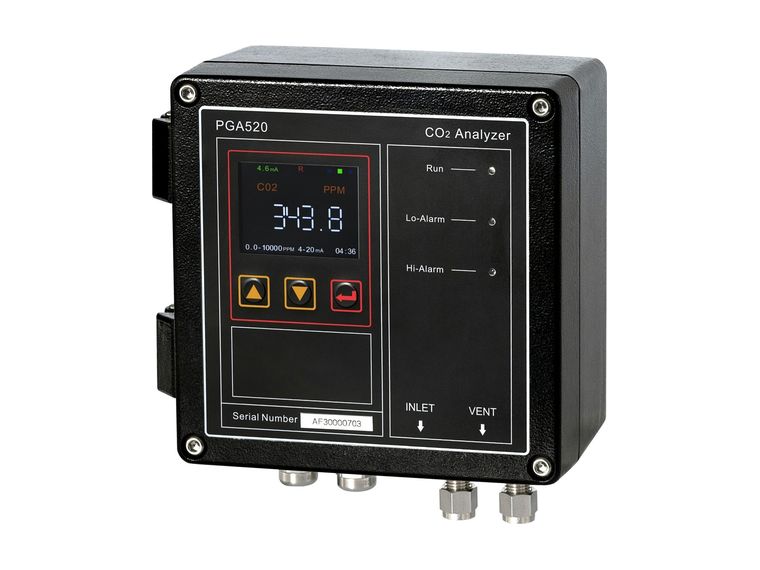
- Gas mixer outlet: CO₂ proportion with the in-line PGA520 (selectable ranges up to 100% CO₂), or spot checks with the portable PGA620.
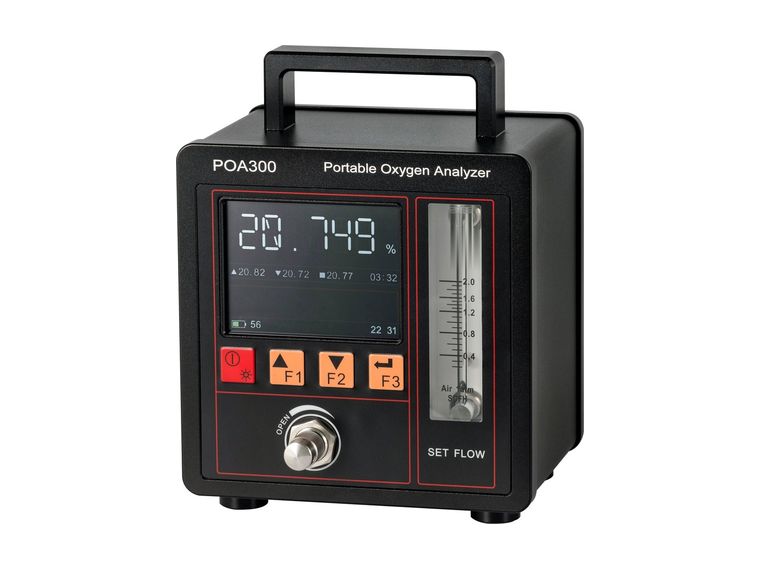
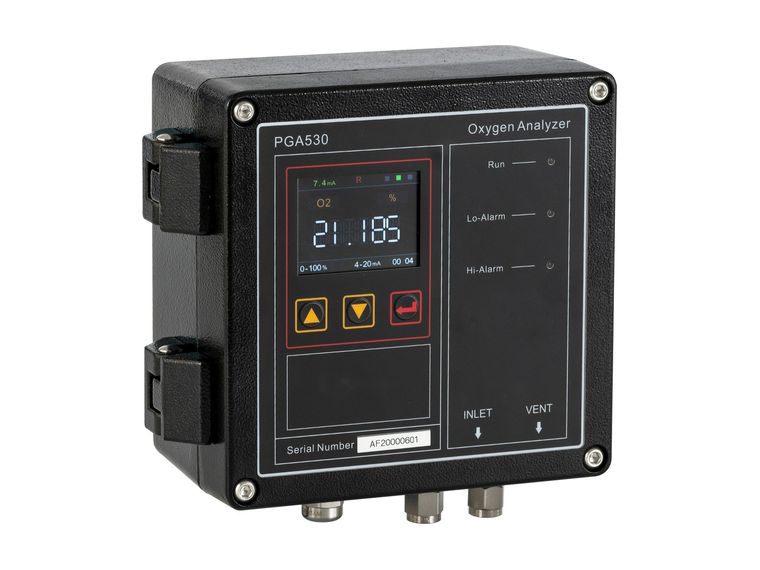
- On-site nitrogen generator outlet: residual oxygen with the PGA530 in-line or POA300 portable.
- Mixtures containing CO₂: oxygen with a paramagnetic analyzer such as the POA3500. Electrochemical oxygen cells are not used in a CO₂ background.
- Ripening rooms: fruit gives off CO₂ while it ripens, and rooms are ventilated to keep CO₂ low. The PGA520 on its 0–5% range monitors this and can trigger ventilation.
- CO₂ supply for carbonation: moisture in the incoming CO₂ with a DPT-600 Plus. Beverage-grade CO₂ specifications commonly limit water to about 20 ppm by volume, roughly −55 °C frost point at atmospheric pressure.
Choosing between portable and in-line
In-line analyzers suit mixers and generators that run all shift, where an alarm should stop the line before packs go out with the wrong gas. Portable analyzers suit QA rounds, start-up checks after a recipe change, and plants with several small lines.
Questions we are asked
Can you measure oxygen and CO₂ in the same gas?
Yes, with two analyzers on one sample line: NDIR for CO₂ and, where CO₂ is present, a paramagnetic oxygen analyzer.
Why not use an electrochemical oxygen sensor in a MAP mixture?
The alkaline electrolyte in many electrochemical cells reacts with CO₂, which shortens cell life and affects the reading. For gases that contain CO₂, a paramagnetic measurement is used.
Do I need to check the nitrogen generator if the mixer is already monitored?
It helps. A rising oxygen level at the generator shows a problem before it reaches the mixer and the packs.
Where exactly are the points? See the animated CO₂ capture measurement-point map.
Discuss your application
Tell us the gas, pressure, sample point and the limit you need to meet, and we will propose instruments and a sample system.