 MIDDLE EAST
- Home
- Applications
- CCS CO₂ dehydration
Application
CO₂ capture and storage: dehydration, purity and oxygen checks
Measuring the water content of captured CO₂ after dehydration, and its purity and oxygen content before it enters the pipeline to storage or enhanced oil recovery, with YORK dew point and gas analyzers.
Why it matters
Captured CO₂ is compressed and dried before it goes down a pipeline. Wet CO₂ forms carbonic acid with free water, which corrodes carbon-steel pipe, and water can form hydrates at pipeline conditions. Glycol contactors or molecular-sieve dryers remove the water, and a dew point analyzer at the dryer outlet confirms the specification and warns of breakthrough. CO₂ purity and oxygen are checked because storage sites and pipelines set limits on both. CCS projects in the UAE and Saudi Arabia are moving to industrial scale, so these measurements are now part of Gulf gas processing and industrial plants.
Typical design values
| Quality item | Typical design value | Note |
|---|---|---|
| Water after dehydration | 500 ppmv for EOR pipelines, about −27 °C frost point at 1 atm | Many storage projects set tighter limits |
| CO₂ purity | ≥ 95 % | Design value; the project specification governs |
| Oxygen | 10 ppmv | Design value for EOR; needs an analyzer qualified for CO₂ service |
These are published design parameters, not a universal standard. Water and impurity limits are set per pipeline and storage site. More background: carbon capture in the Gulf: CO₂ dehydration.
Where to measure
| # | Point | What is checked | YORK instrument |
|---|---|---|---|
| 1 | Dehydration unit outlet | Water content (dew point), breakthrough warning | DPT830 in-line |
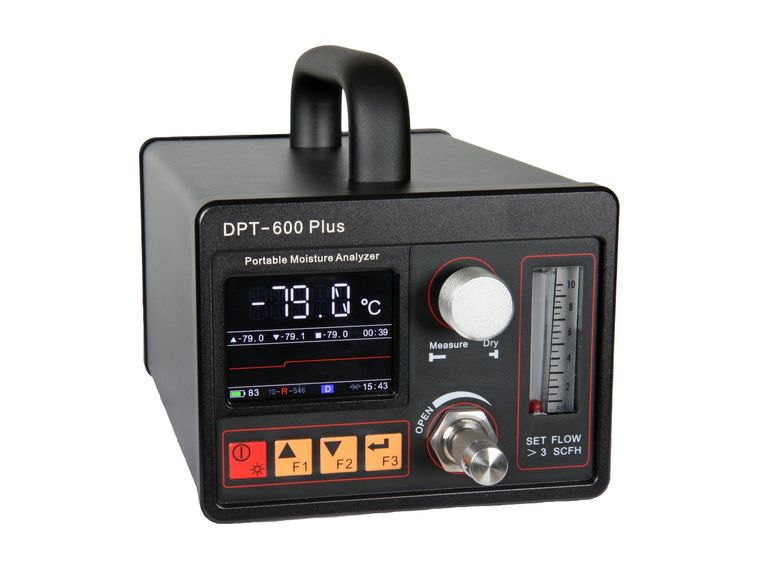
| 2 | Dryer checks, commissioning and audits | Reference dew point | DPT-600 Plus portable; DM9900 chilled mirror reference |
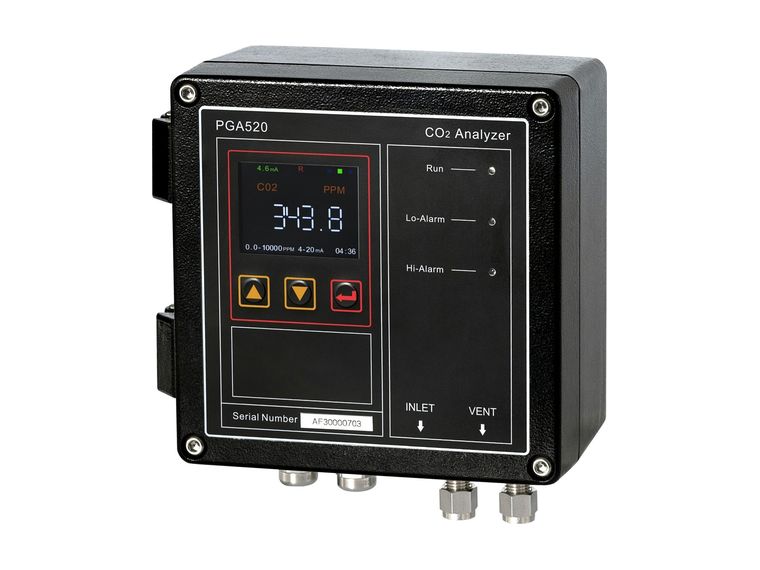
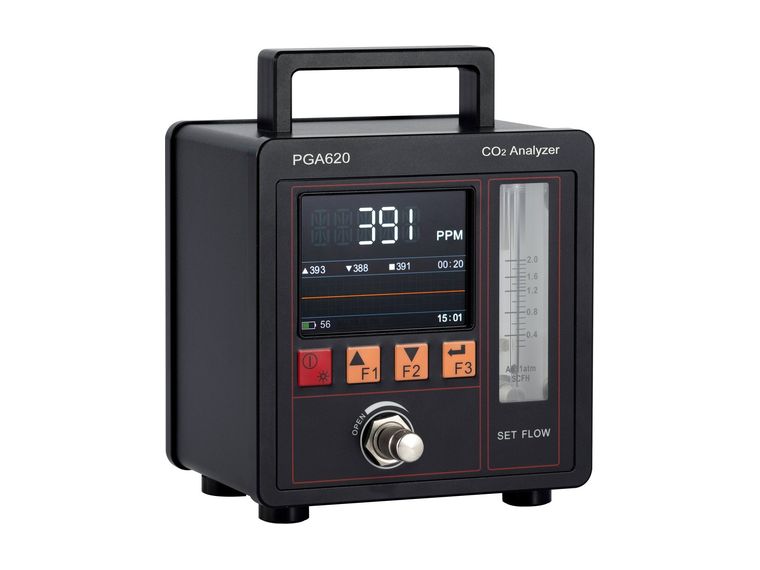
| 3 | Compressor discharge and pipeline inlet | CO₂ concentration (process trend) | PGA520 in-line; PGA620 portable |
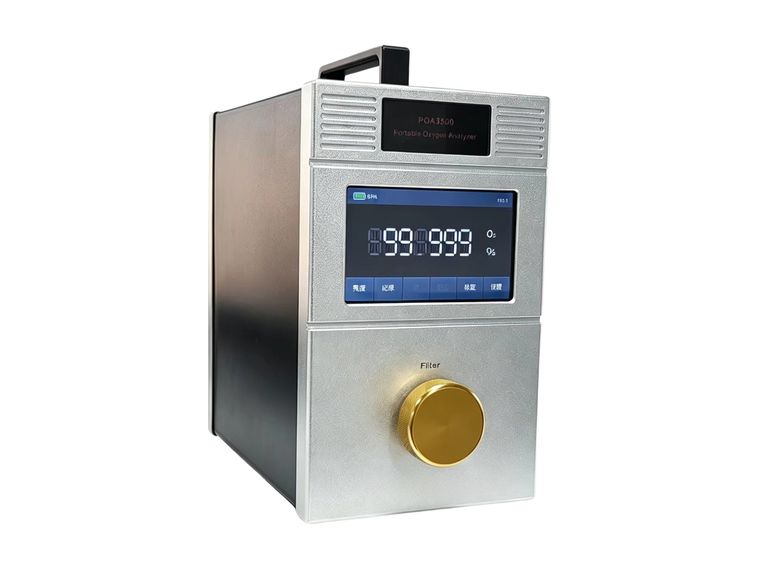
| 4 | Capture unit inlet and gas containing CO₂ | Percent-level oxygen | POA3500 paramagnetic |
| 5 | Pipeline to storage or EOR | Trace oxygen, CO, H₂S, N₂ and other impurities | Integrated system: trace O₂ analyzer qualified for CO₂ service and process gas chromatograph |
Taking reliable readings
- Heat the pressure regulator. CO₂ cools strongly when its pressure drops, so an unheated regulator can freeze or condense water before the analyzer.
- Measure in the gas phase near atmospheric pressure. YORK dew point instruments accept up to 4 barg; convert the reading to line pressure with the dew point calculator.
- Do not use electrochemical oxygen cells in CO₂: a CO₂ background shortens their life sharply. The POA3500 uses a paramagnetic sensor suited to gas containing CO₂.
- For specification checks of CO₂ purity, a gas chromatograph or a narrow-range analyzer is used; the PGA520 and PGA620 NDIR analyzers show the process trend.
- Check the CO₂ analyzers with span gas; the span gas dilution calculator helps prepare check points.
Certificates are provided per model with quotation.
Questions we are asked
How much water is allowed in CO₂ for a CCS pipeline?
It is set per project. A widely used design value for EOR pipelines is 500 ppmv, about −27 °C frost point at 1 atm; many storage projects specify tighter limits. A dew point analyzer at the dehydration outlet confirms it.
How do you measure dew point in compressed or dense-phase CO₂?
Take the sample through a heated pressure regulator, reduce it to near atmospheric pressure, measure in the gas phase and convert the result to line pressure.
Which oxygen analyzer can be used in CO₂?
For percent-level oxygen in gas containing CO₂, the POA3500 paramagnetic analyzer. Trace oxygen at the ppm level in CO₂ needs an analyzer qualified for CO₂ service, which YORK supplies as part of an integrated system. Electrochemical cells are not suitable in a CO₂ background.
Which YORK instruments are used in CO₂ capture?
The DPT830 in-line and DPT-600 Plus portable dew point meters for water content, the DM9900 chilled mirror as a reference, the PGA520 in-line and PGA620 portable NDIR CO₂ analyzers, and the POA3500 paramagnetic oxygen analyzer.
Suggested YORK instruments
- Dehydration outlet, in-lineDPT830 →
- Dryer checks and auditsDPT-600 Plus →
- CO₂ concentration, in-linePGA520 →
- CO₂ spot checksPGA620 →
- Oxygen in gas containing CO₂POA3500 →
All capture points: CO₂ capture: measurement points. Gulf background: carbon capture in the Gulf: CO₂ dehydration and water content measurement.
Converting water content? Use the moisture and oxygen unit converter or the dew point to ppm table. Related: food and beverage CO₂.
Measuring water in captured CO₂?
Send us the pressure and temperature at the sample point, the water and oxygen limits and the area classification, and we will propose analyzers and a sample system.