 MIDDLE EAST
- Home
- Applications
- Industrial gases
Application
Industrial gases: purity checks
Purity measurement of nitrogen, argon, hydrogen and other industrial gases: trace moisture, trace oxygen and CO₂ with YORK analyzers for production, filling and quality control.
Why it matters
Industrial and specialty gases are specified by purity, and moisture and oxygen are among the most common impurities to verify. Trace levels are expressed in ppm by volume or as dew point.
Typical checks include trace oxygen and moisture in nitrogen and argon from air separation, moisture in cylinder filling and quality control laboratories, and CO₂ concentration in process and product gases.
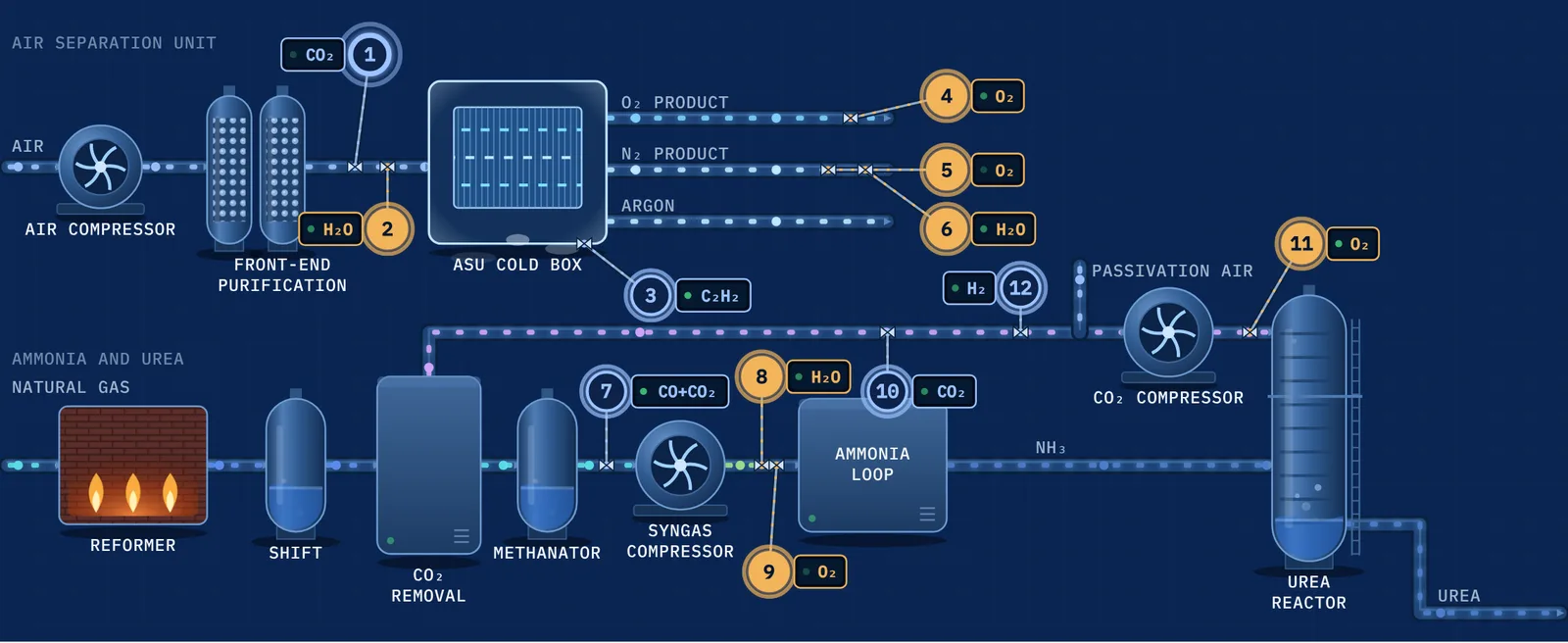
What to measure, and to what level
Most purity checks come down to three numbers: trace oxygen, trace moisture and, for some gases, CO₂. The limit comes from the gas grade or the customer's specification, so the first step is to confirm both the limit and its unit. Moisture limits are written either in ppm by volume or as a frost point. The two are linked by the vapour pressure of ice; at atmospheric pressure:
| Moisture | Frost point at 1 atm |
|---|---|
| 0.5 ppmv | about −80 °C |
| 1 ppmv | about −76 °C |
| 3 ppmv | about −69 °C |
| 10 ppmv | about −60 °C |
| 20 ppmv | about −55 °C |
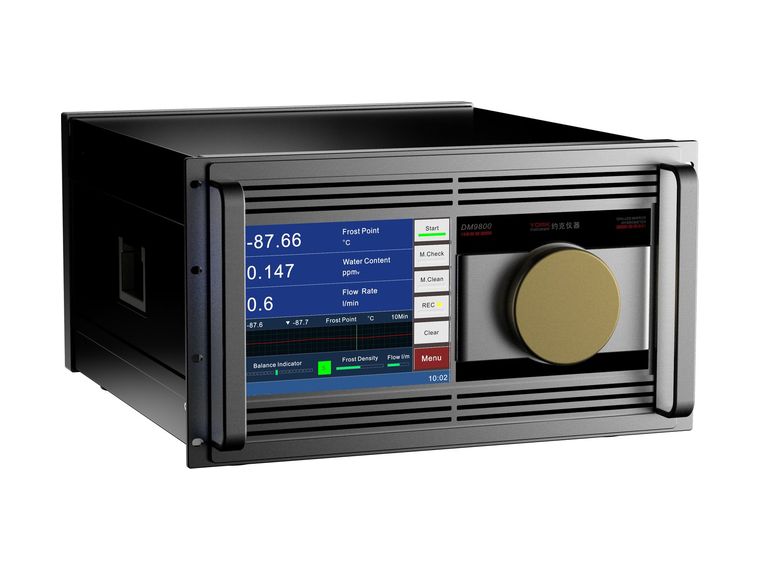
High-purity nitrogen and argon grades often allow only a few ppm of water, which puts the frost point between about −70 °C and −80 °C. That is within the range of the DPT-600 Plus and DPT830 (down to −110 °C frost point) and of chilled mirror references such as the DM9800 (−80 °C) and DM9900 (−90 °C). For other values, use the dew point calculator or the dew point to ppm guide.
Where to measure
- Air separation units: product nitrogen, oxygen and argon after the cold box and before storage or pipeline delivery. Trace O₂ in N₂ and Ar, and moisture in every product.
- On-site nitrogen generators (PSA and membrane): residual oxygen at the generator outlet. Depending on the design, purity ranges from about 95% to 99.999% N₂, so the oxygen analyzer range should match: PGA530 or POA300 for percent levels, PGA500 or POA200 for ppm levels.
- Cylinder and bundle filling: moisture and oxygen in the filled gas, plus residual moisture in cylinders after hydrostatic testing or valve changes.
- QC laboratories: batch release against the certificate of analysis, often with a chilled mirror hygrometer as the reference.
- Hydrogen production: moisture after the dryer and trace oxygen after the deoxo unit.
Getting a trustworthy trace reading
At ppm level, the sample system decides the result more than the analyzer does. These are the points we check on every project:
- Use stainless steel tubing, preferably electropolished, with metal-sealed fittings. Plastic tubing lets oxygen and moisture from the air permeate into the sample.
- Keep the line short and keep it flowing. After connecting a portable analyzer, allow enough purge time for the reading to settle. Near −70 °C frost point this can take tens of minutes.
- Leak-check every joint. A small leak on a low-pressure line pulls air in and gives high oxygen and moisture readings.
- Measure dew point at or near atmospheric pressure. YORK dew point instruments accept up to 4 barg, so a pressure-reducing valve is fitted on higher-pressure lines.
- Match the oxygen sensor to the background gas. Electrochemical cells suit nitrogen, argon and other inert gases. In hydrogen and hydrocarbons the expected cell life is about 12 months. In a CO₂ background, use a paramagnetic analyzer such as the POA3500.
Questions we are asked
Can one instrument check both moisture and oxygen?
No. They are separate measurements with different sensors. On filling stations and ASUs they are usually mounted together in one sampling panel, which YORK can supply as an analyzer panel.
How do I convert a ppm moisture limit to dew point?
At atmospheric pressure, 1 ppmv is about −76 °C frost point and 10 ppmv about −60 °C. The dew point calculator handles other pressures.
Chilled mirror or metal-oxide sensor?
A chilled mirror measures dew point directly and is used as the reference in the lab. Metal-oxide sensors are faster and smaller, and suit continuous and portable checks. Many sites use both; see chilled mirror vs metal oxide.
Suggested YORK instruments
- Aviation MRO check pointsMap →
- Air separation unit measurement pointsMap →
- Trace oxygen, portablePOA200 →
- Trace oxygen, in-linePGA500 →
- Trace moisture, portableDPT-600 Plus →
- Reference dew point in the QC labDM9800 →
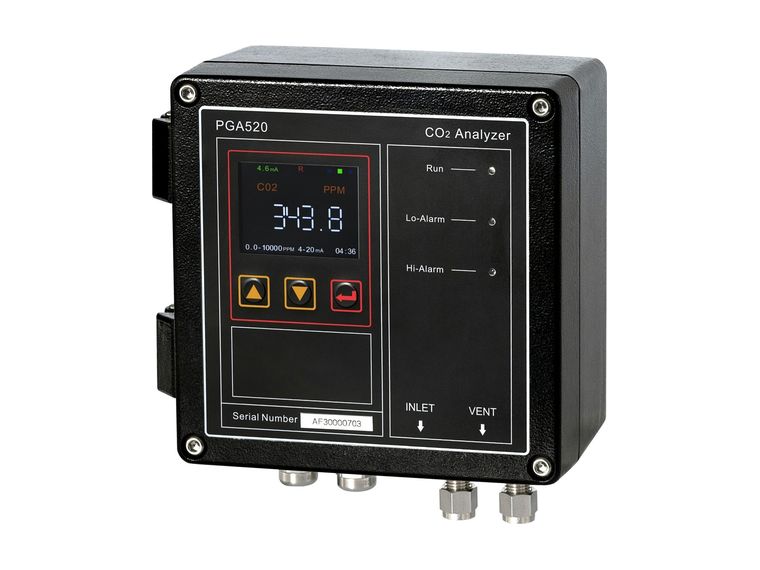
- CO₂ concentrationPGA520 →
- Trace moisture, in-lineDPT830 →
- Percent oxygen (N₂ generators)PGA530 →
- Oxygen in a CO₂ backgroundPOA3500 →
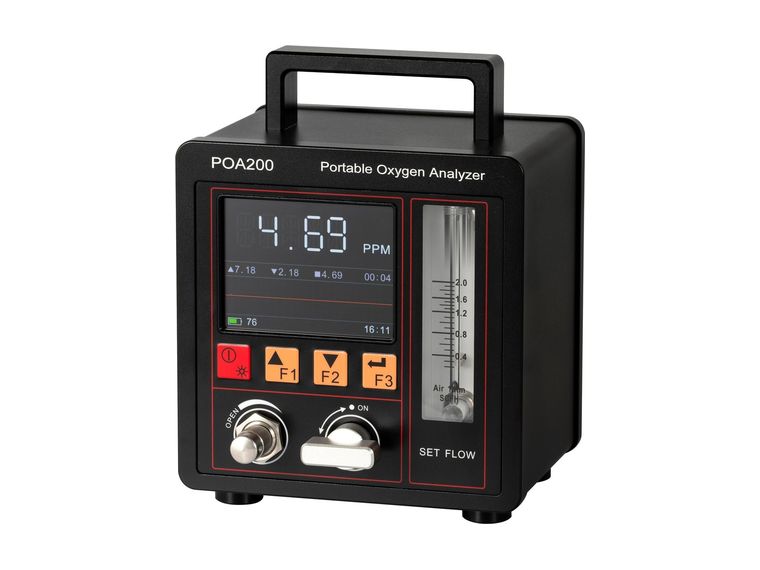
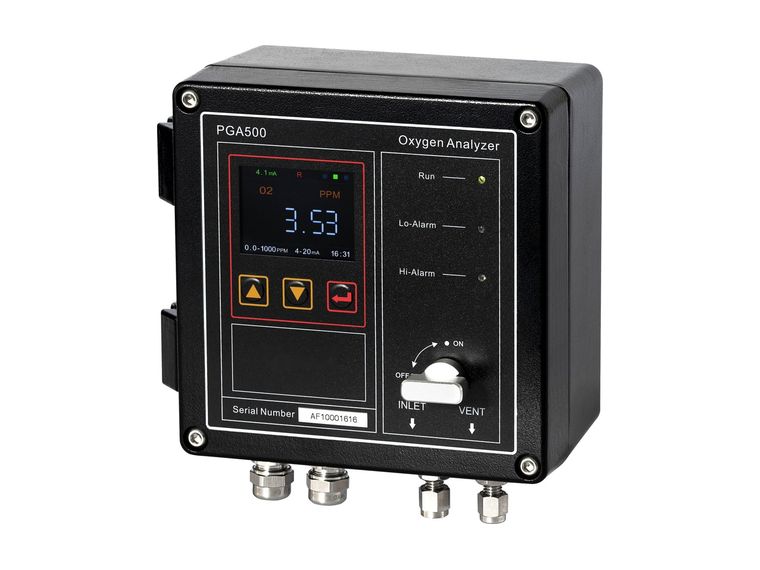
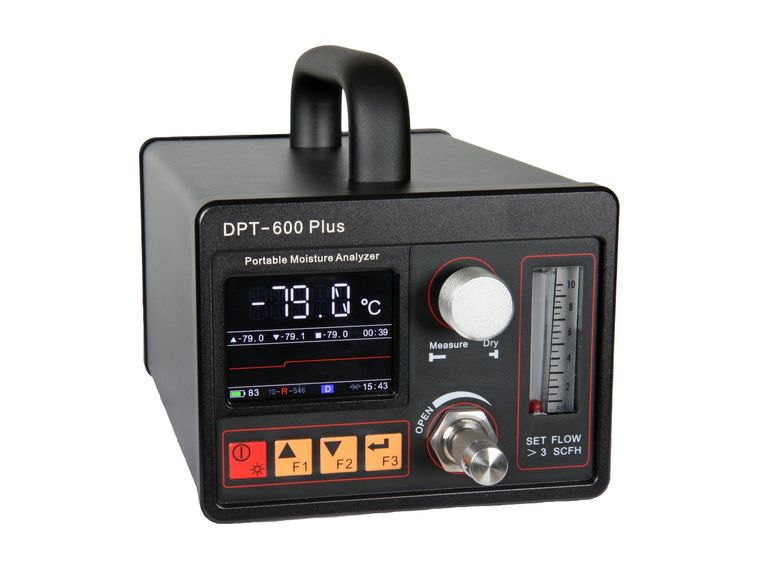
Where are the measurement points in an ASU or ammonia plant? See the animated measurement-point map.
Where exactly are the points? See the animated green hydrogen measurement-point map.
Making float glass? See the animated tin bath measurement-point map.
Discuss your application
Tell us the gas, pressure, sample point and the limit you need to meet, and we will propose instruments and a sample system.